
July 26, 2026 |
View Online | Subscribe |

Thousands of Teacher-reviewed Resources!
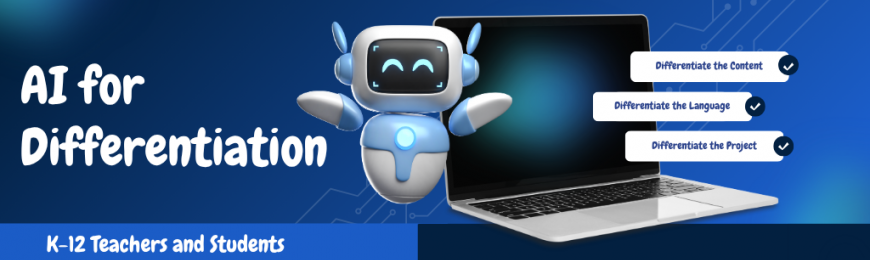
Differentiation Made Easier with AI
Every classroom holds a wide range of learners, and meeting each student where they are can feel like an impossible balancing act. This collection of AI-powered resources is designed to help. From generating tiered assignments and leveled reading passages to creating personalized practice problems and scaffolded supports, these tools can help you differentiate instruction more efficiently, freeing up time so you can focus on your students.
 |
Share your thoughts with our communityWeekly PollThis week, our poll asks, "How comfortable are you using AI tools to support differentiation?" Share your reply with other educators and view the results when you click submit. |
Grades 4-12
GMind AI
GMind AI generates lesson plans differentiated by level, style, and language and pairs each student with a personal AI tutor that adapts in real time to knowledge gaps and pace, making it easy to meet every learner where they are.
Grades 3-12
How to Create Differentiated Multi-Level Lesson Plans with AI
Learn more about GMind AI (shared above) through this step-by-step tutorial video. See the tool in action and learn how to quickly generate differentiated lesson content by level, style, and language so every student gets material suited to their needs.
Grades 2-12
Diffit
Diffit helps teachers differentiate lessons and teaching materials. Input literally anything—books, text, PDFs, links, or vocabulary—and follow the prompts to create differentiated materials like leveled reading passages, exit tickets, and more.
Grades 5-12
Latimer: AI for Everyone
Latimer can help differentiate content by generating explanations, examples, and materials with a culturally responsive, diverse-history lens—making lessons more relatable and accessible for students from varied cultural backgrounds.
Grades K-8
Reading Coach
Reading Coach generates AI stories in multiple languages and pulls leveled ReadWorks passages matched to each student's ability and interests so every reader can practice at the right level. In addition, teachers get progress reports to track growth.
Grades 1-12
Brisk Teaching
Brisk Teaching lets educators instantly convert any text to different reading levels, translate it into another language, or create tailored quizzes, feedback, and activities directly inside Google Docs, Google Slides, and Microsoft tools.
Grades 2-12
Nolej
Quickly turn existing content like videos, PDFs, text, or webpages into interactive learning experiences. Using automation, the platform generates quizzes, flashcards, games, interactive videos, and even chatbots—perfect for differentiation.
Grades K-12
Eduaide
Eduaide allows teachers to generate lessons, worksheets, and assessments with built-in difficulty controls, then checks grade level and text complexity—making it easy to create variations that match each student's reading level and needs.
Grades K-12
3 Ways AI Can Help with Lesson Planning and Differentiation
Read all about three practical ways AI supports differentiation: generating leveled lesson materials, scaffolding content for diverse learners, and giving students real-time feedback. It also includes a CRAFT framework for writing effective AI prompts.
Grades K-12
Khanmigo
Khanmigo helps teachers quickly build differentiated lesson plans, student groupings, and rubrics. Students can also chat with a free and patient AI tutor that guides them to answers step by step, adapting support to each learner's individual pace.
Grades K-12
Monsha AI
Monsha lets teachers adjust the reading level, cognitive demand, skill focus, and language of any lesson. It includes the ability to translate, simplify, or enrich content, as well as create scaffolded variations tailored to different learner groups.
Grades 3-12
Using AI to Differentiate Lessons for ELLs: Live Demo & Expert Tips
This practical video explores how AI can help teachers differentiate instruction for ELL students more efficiently. You’ll learn how to use AI to adapt reading passages, simplify complex texts, and more through real-world examples and demonstrations.
This Week at TeachersFirst
We’re excited to invite you to attend two virtual workshops this week! We’re also sharing a related blog post and a curated collection packed with even more AI tools with differentiation features. Finally, we invite you to check out a paid opportunity to join our team as a part-time contributor. Read the details below!
 |
Tuesday, 7/28, 6 PM ETOK2Ask: Create Interactive Activities with Canva Code—No Coding RequiredIn this session, participants will explore Canva Code's core capabilities, build at least one interactive activity, and connect the format to specific instructional purposes, including formative assessment, differentiated practice, and student engagement. |
 |
Wednesday, 7/29, 6 PM ETOK2Ask: Intentional Vocabulary Instruction That Supports LearningParticipants will learn about Marzano's six-step vocabulary process and the Frayer model, how these strategies work across content areas and grade levels, and leave with classroom-ready tools they can implement immediately—with or without technology. |
 |
Infusing Technology BlogChoice Boards: A Cognitive Gym for Deepening Student ThinkingChoice boards are a great tool for differentiating learning and projects because they let students choose activities matched to their readiness, interests, and learning style. This post covers board formats, planning tips, and free starter templates. |
 |
Special Topic CollectionAI for DifferentiationIf you're looking for even more AI tools for differentiation, this collection offers practical, ready-to-use strategies for differentiating content, pacing, and support for all learners. Find tools to differentiate materials in minutes instead of hours. |
 |
Apply to join the TeachersFirst teamCalling Passionate and Creative EducatorsWe're seeking highly knowledgeable and engaging educators to join our team as curriculum writers and tech coaches! Help us save teachers time by delivering what they need, when they need it. |
Brought to You by TeachersFirst
Editorial
Contact the editor
About TeachersFirst
TeachersFirst is a collection of curated, classroom-ready content and ideas — including teacher-authored
reviews of thousands of web resources. Built-in guidance from seasoned professionals makes effective classroom
technology use trouble-free. TeachersFirst is made available free to K12 teachers by The Source for
Learning, Inc., a nonprofit that has been providing educational resources for more than 40 years.