
Water, Water Everywhere - Looking at Clean, Accessible Water for All People
Introduction | Background Knowledge | Activities | Extensions | Standards
Introduction
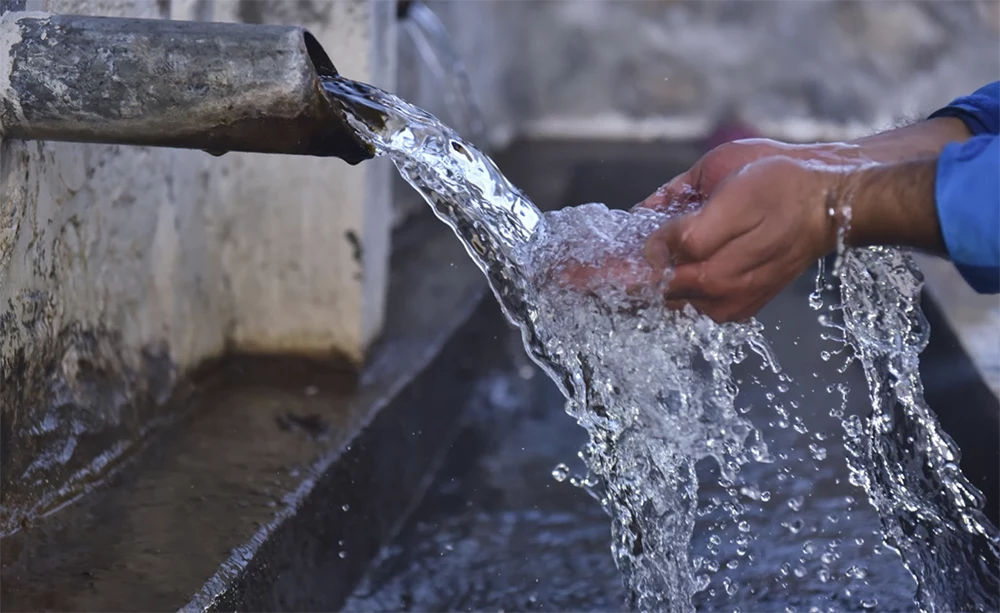
About 71% of the Earth’s surface is water. However, only about 3% of that water is freshwater, and about 2.6% is in ice, leaving about 0.4% of usable water. Keeping this water clean and available is a goal both domestically and internationally.
Click the image above to read more about the UN's Sustainable Development Goal #6.
Background Knowledge
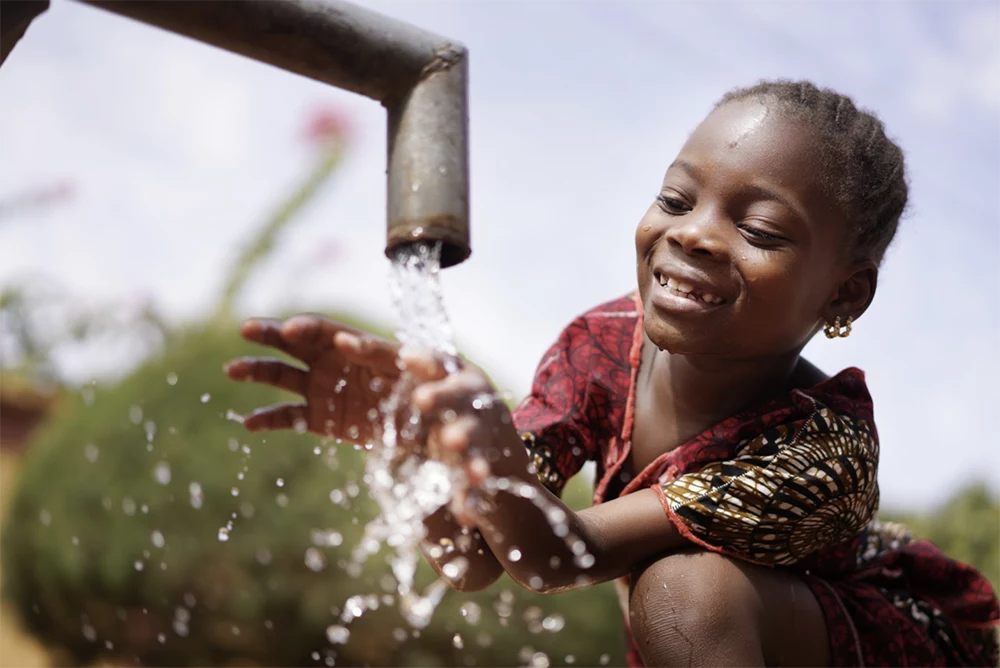
The United Nations has acknowledged that access to clean drinking water is a global concern and a global priority. A strategic goal for the UN’s Department of Economic and Social Affairs is to “ensure availability and sustainable management of water and sanitation for all.” According to the UN, 26% of the world's population (about 2 billion people) lacks access to safely managed water. 129 countries are not projected to have safely managed water by 2030. In addition, 2.3 billion people live in places that are considered “water-stressed.” This means the water demand exceeds the availability. Most water-stressed countries are in the Middle East and northern Africa, with Qatar being the most water-stressed country in the world. The UN has identified targets and indicators to help move toward accessible, clean water by 2030. The goal focuses on reducing pollution in the world’s waters. There is also a goal to increase the efficient use of water. The UN also proposes protecting and restoring water-related ecosystems across the globe and implementing resource management and collaboration.
ACTIVITIES
-
UN Target 1 - By 2030, achieve universal and equitable access to safe and affordable drinking water for all.
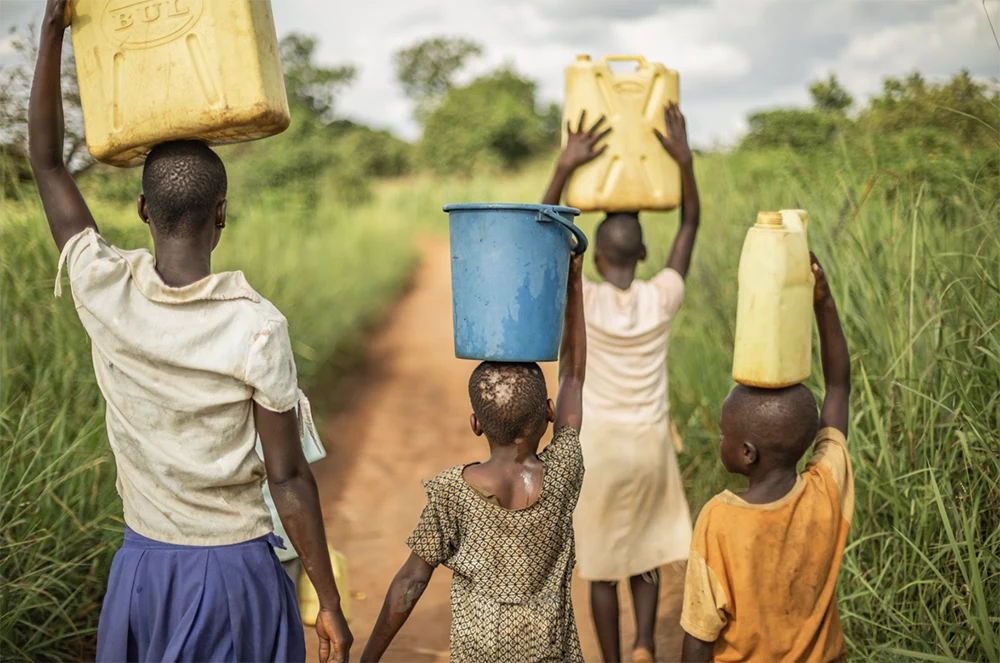
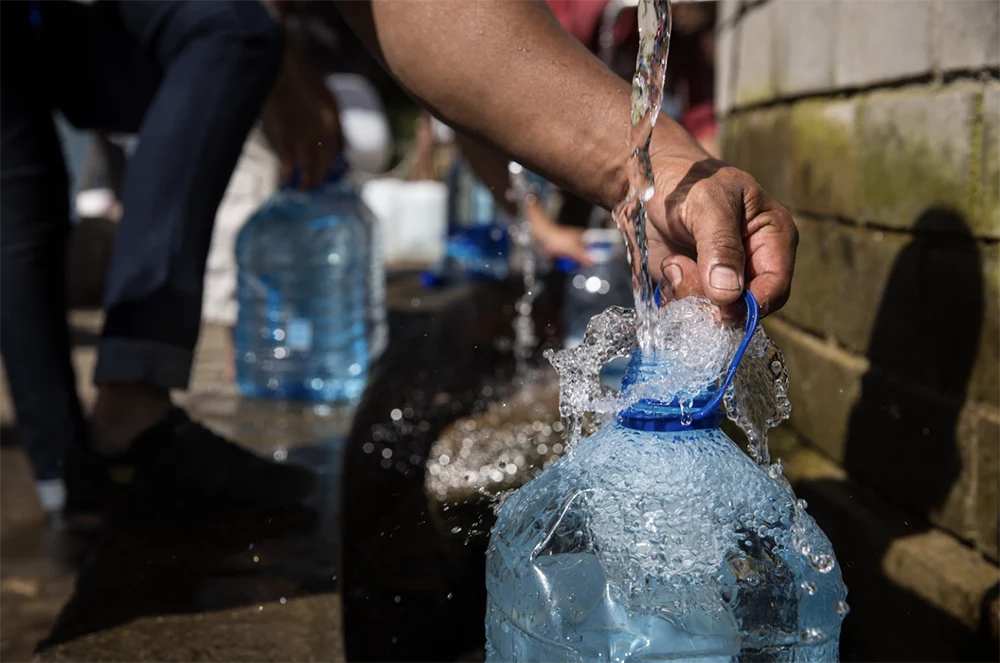
- Some families worldwide lack access to water and must travel to a water source to bring it back home. While this is most common in sub-Saharan Africa, many people in the Navajo Nation in New Mexico lack access to water and must go to a central well or rely on a monthly 400-gallon delivery.
-
READ
-
A Long Walk to Water by Linda Sue Park (ISBN 9780547577319)
- This book is written as two tandem stories. The first is Salva’s story. Set in 1985, Salva is one of Sudan’s “Lost Boys.” This story alternates with Nya, a girl in 2008 who makes the two-mile walk twice a day to get water for her family. These two stories eventually powerfully intersect.
- Use TeachersFirst Reading Trek: A Long Walk to Water (reviewed here) to plot Salva's and Nya's journeys in the book.
-
The Water Lady: How Darlene Arviso Helps a Thirsty Navajo Nation by Alice B. McGinty (ISBN 9780525645009)
- This is the true story of Darlene Arviso, a woman who delivers water to families of the Navajo Nation.
-
The Water Princess by Susan Verde (ISBN 9780399172588)
- Gie Gie would like the water to be closer. She cannot bring it closer to her home, so she walks to the well each morning to collect water. She carries the heavy pot of water on her head. This book is based on the life of Georgie Badiel, an African-born model.
A Cool Drink of Water by Barbara Kerley (ISBN 9780792254898)
- Photographs of people across the world drinking water enhance this simple text.
-
A Long Walk to Water by Linda Sue Park (ISBN 9780547577319)
- WATCH
-
DO
-
Carry jugs of water!
- PBS has an excellent lesson plan that guides students in exploring how challenging it is to carry water.
- Use the TeachersFirst Reading Trek for A Long Walk to Water to map the important locations in the book.
- As a class, calculate the actual mileage these children travel each week and map it to local landmarks in your community.
-
Carry jugs of water!
-
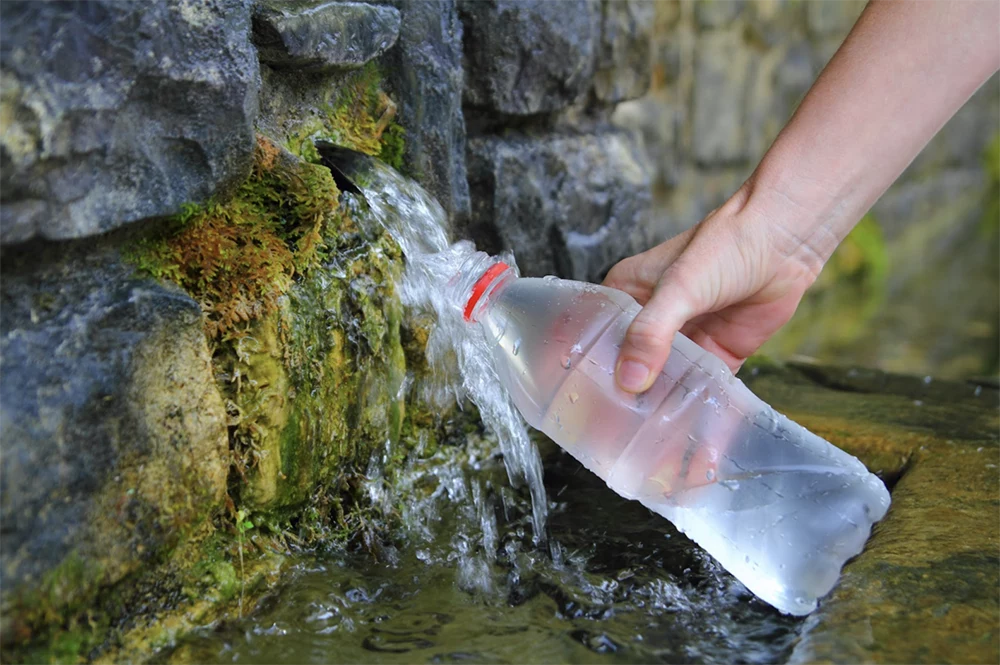
UN Target 3: By 2030, improve water quality by reducing pollution, eliminating dumping and minimizing release of hazardous chemicals and materials, halving the proportion of untreated wastewater, and substantially increasing recycling and safe reuse globally.
- Safe water is clean water.
-
READ
- We Are the Water Protectors by Carole Lindstrom (ISBN 9781250203557)
- An Ojibwe girl protests the pipeline that is being built on her people’s land. This is a response to the Dakota Access Pipeline in North and South Dakota.
-
The Mess the We Made by Michelle Lord (ISBN 978-1947277144)
- This cumulative tale leads readers through the effects of ocean pollution. The illustrations complement the text beautifully!
-
The Lorax by Dr. Seuss (ISBN 9780394823379)
- The Lorax teaches students to take care of the Earth.
-
Poisoned Rivers and Lakes by Ellen Lawrence (ISBN 9781627241052)
- This nonfiction book discusses the impact of pollution on rivers and lakes.
- WATCH
-
DO
- Simulate an oil spill. Students follow the inquiry process to try and clean the oil off the feathers. This activity can lead to a class discussion or writing activity.
- Water plants with acid rain. Students use water as a control for one plant, then water two other plants with lemon juice and vinegar to observe the effect of acid on plants.
- Play Hide and Seek with Pollution. Students use their senses to try and detect water pollution.
- Lead the students through the Like Oil and Water Activity. Students make mixtures of different materials and discuss their observations.
- The Mount Pleasant, South Carolina Recreations Center has many activities for teachers to try with students in grades K-9. Examples include learning about watersheds, examining the use of excess fertilizer, and observing the effects of suspended solids in water on light penetration.
- Make and test a water filter with this activity from National Geographic. Find more ideas at the Clean Water Experiment for Kids. Students can predict which material best filters water and why.
- Learn more from TeachEngineering (reviewed here) at the University of Colorado Boulder.
- Play The Watershed Game. Using different scenarios, students work to clean and protect a watershed.
-
UN Target 4: By 2030, substantially increase water-use efficiency across all sectors and ensure sustainable withdrawals and supply of freshwater to address water scarcity and substantially reduce the number of people suffering from water scarcity.
-
READ
-
Why Should I Save Water? by Jen Green (ISBN 9780764131578)
- A boy learns why we should be careful with water and explores ways to use less water daily.
-
Save Water Every Day by Mari Schuh (ISBN 9781622432042)
- This nonfiction book shares ways to save water.
-
Why Should I Save Water? by Jen Green (ISBN 9780764131578)
-
WATCH
- Water Fight! A Crash Course for Kids
- Water Fix! A Crash Course for Kids
- After watching the Crash Course videos, ask students to use Adobe Express (reviewed here) to create short public service announcements about water-saving methods and share their videos on your class or school website.
-
DO
- Use this discussion guide from World Vision to talk to students about global water scarcity.
- Students can identify their water footprint with a water calculator. Use Google Sheets to correlate students’ data and build a class bar graph comparing footprints.
-
READ
EXTENSIONS
Community Outreach
- Consider ways to help provide clean water worldwide. Hold a fundraiser and donate to your favorite clean water charity. One great fundraiser would be to host a 6K Run/Walk. For women in developing countries who have to walk for water, the average distance is 6 kilometers (3.5 miles). Map out a 3.5-mile loop around your school or community, and invite families to donate a small amount to help cover the cost of running or walking the course. They can experience the 6-kilometer distance and raise money to help others.
Help Save the Earth
- Look around the community to see how you can keep waterways clean. Look into World Cleanup Day. f you live near a waterway, find a local clean-up day. Do a litter pickup around your school building to help keep trash out of waterways.
- Check out Citizen Science projects, like water quality monitoring from the Smithsonian, that are included to address UN Goal 6, but there are other ideas to help save the Earth. Find additional Citizen Science resources on the TeachersFirst Citizen Science Resources Special Topics Page (reviewed here).
Participate in World Water Day
- March 22 is World Water Day! This United Nations initiative, started in 1993, tries to raise awareness of UN Goal #6 and celebrate water! Learn more and get involved here!
- In conjunction with World Water Day, sign up to monitor a local water source with the Earth Echo Water Challenge (reviewed here). The challenge kicks off on World Water Day yearly and runs through December. Classroom water testing kits are available for purchase. There is also an application to apply for a sponsored kit!
Use Choice Boards to Engage Students in Understanding Clean Water Initiatives
-
Use Canva Choice Board Templates (reviewed here) to design and share choice boards that encourage students to learn about and understand water through their chosen activities. Suggestions to include on choice boards:
- Include book and video activities mentioned above.
- Create an announcement about water-saving methods using Animate Characters (reviewed here). This easy-to-use tool from Adobe lets students choose a background and character, record their announcement, and generate an animated video.
- Use LiveGap Charts (reviewed here) to create charts and graphs in different formats to evaluate statistics.
- Create comics using Creately Comics (reviewed here) to tell the story of a superhero that cleans up a local water hazard.
- Add links to books, videos, articles, and other resources to Gemini Notebook (formerly NotebookLM) (reviewed here) to create audio podcasts, videos, presentations, infographics, and more to include as part of a multimedia presentation based upon student research.
- Add questions to any video using EdPuzzle (reviewed here) to build comprehension.
- Search Nearpod (reviewed here) to find resources and presentations to include on your choice board, featuring videos and learning activities.
CORRELATION TO STANDARDS
-
AASL National School Library Standards
-
Inquire Shared Foundation, Think Domain - Learners display curiosity and initiative by:
- 1. Formulating questions about a personal interest or a curricular topic.
- 2. Recalling prior and background knowledge as context for new meaning.
-
Inquire Shared Foundation, Share Domain - Learners adapt, communicate, and exchange learning products with others in a cycle that includes:
- 1. Interacting with content presented by others.
- 2. Providing constructive feedback.
- 3. Acting on feedback to improve.
- 4. Sharing products with an authentic audience.
-
Include Shared Foundation, Share Domain - Learners exhibit empathy with and tolerance for diverse ideas by:
- 1. Engaging in informed conversation and active debate.
- 2. Contributing to discussions in which multiple viewpoints on a topic are expressed.
-
Include Shared Foundation, Grow Domain - Learners demonstrate empathy and equity in knowledge building within the global learning community by:
- 1. Seeking interactions with a range of learners.
-
Engage Shared Foundation, Think Domain: Learners follow ethical and legal guidelines for gathering and using information by:
- 1. Responsibly applying information, technology, and media to learning.
- 2. Understanding the ethical use of information, technology, and media.
-
Engage Shared Foundation, Create Domain: Learners use valid information and reasoned conclusions to make ethical decisions in the creation of knowledge by:
- 1. Ethically using and reproducing others’ work.
- 2. Acknowledging authorship and demonstrating respect for the intellectual property of others.
- 3. Including elements in personal-knowledge products that allow others to credit content appropriately.
-
Engage Shared Foundation, Grow Domain: Learners engage with information to extend personal learning by:
- 1. Personalizing their use of information and information technologies.
- 2. Reflecting on the process of ethical generation of knowledge.
- 3. Inspiring others to engage in safe, responsible, ethical, and legal information behaviors.
-
Collaborate Shared Foundation, Think Domain - Learners identify collaborative opportunities by:
- 1. Demonstrating their desire to broaden and deepen understandings.
- 2. Developing new understandings through engagement in a learning group.
- 3. Deciding to solve problems informed by group interaction.
-
Collaborate Shared Foundation, Create Domain - Learners participate in personal, social, and intellectual networks by:
- 1. Using a variety of communication tools and resources.
- 2. Establishing connections with other learners to build on their own prior knowledge and create new knowledge.
-
Collaborate Shared Foundation, Grow Domain - Learners actively participate with others in learning situations by:
- 2. Recognizing learning as a social responsibility.
-
Explore Shared Foundation, Think Domain - Learners develop and satisfy personal curiosity by:
- 1. Reading widely and deeply in multiple formats and writing and creating for a variety of purposes.
-
Explore Shared Foundation, Create Domain - Learners construct new knowledge by:
- 1. Problem solving through cycles of design, implementation, and reflection.
-
Explore Shared Foundation, Share Domain - Learners engage with the learning community by:
- 3. Collaboratively identifying innovative solutions to a challenge or problem.
-
Explore Shared Foundation, Grow Domain - Learners develop through experience and reflection by:
- 1. Iteratively responding to challenges.
- 2. Recognizing capabilities and skills that can be developed, improved, and expanded.
- 3. Open-mindedly accepting feedback for positive and constructive growth.
-
Inquire Shared Foundation, Think Domain - Learners display curiosity and initiative by:
-
ISTE Standards for Students
-
Empowered Learner 1.1
- 1.1.b. Students build networks and customize their learning environments in ways that support the learning process.
- 1.1.c. Students use technology to seek feedback that informs and improves their practice and to demonstrate their learning in a variety of ways.
-
Digital Citizen 1.2
- 1.2.c. Demonstrate an understanding of and respect for the rights and obligations of using and sharing intellectual property.
-
Knowledge Constructor 1.3
- 1.3.d. Students build knowledge by actively exploring real-world issues and problems, developing ideas and theories, and pursuing answers and solutions.
-
Innovative Designer 1.4
- 1.4.d. Students exhibit a tolerance for ambiguity, perseverance, and the capacity to work with open-ended problems.
-
Global Collaborator 1.7
- 1.7.c. Students contribute constructively to project teams, assuming various roles and responsibilities to work effectively toward a common goal.
-
Empowered Learner 1.1