

Interest in virtual school settings grew exponentially due to the COVID-19 pandemic and continues to influence educational models today. Recent statistics indicate that more than 562,659 students were enrolled in virtual schools in the United States during the 2022-2023 school year. This viable learning option offers unique opportunities, such as greater flexibility to address the specific needs of students and increased access to resources in remote areas. It also presents thoughtful challenges, including less synchronous contact with teachers and peers, as well as potential issues with accessing reliable technology. Developing effective teacher-parent partnerships becomes crucial to ensuring student success as the digital educational landscape evolves. Reflecting on what we know from academic research about parent-teacher relationships and student success lays the foundation for defining actionable strategies to foster these essential relationships, specifically in digital spaces.
Research-Backed Benefits of Parent-Teacher Collaboration
The quality of the parent-teacher relationship is a time-tested, critical component of student success. Regular communication, mutual trust, and collaborative problem-solving are key indicators of a strong partnership. A few benefits of this collaboration include:
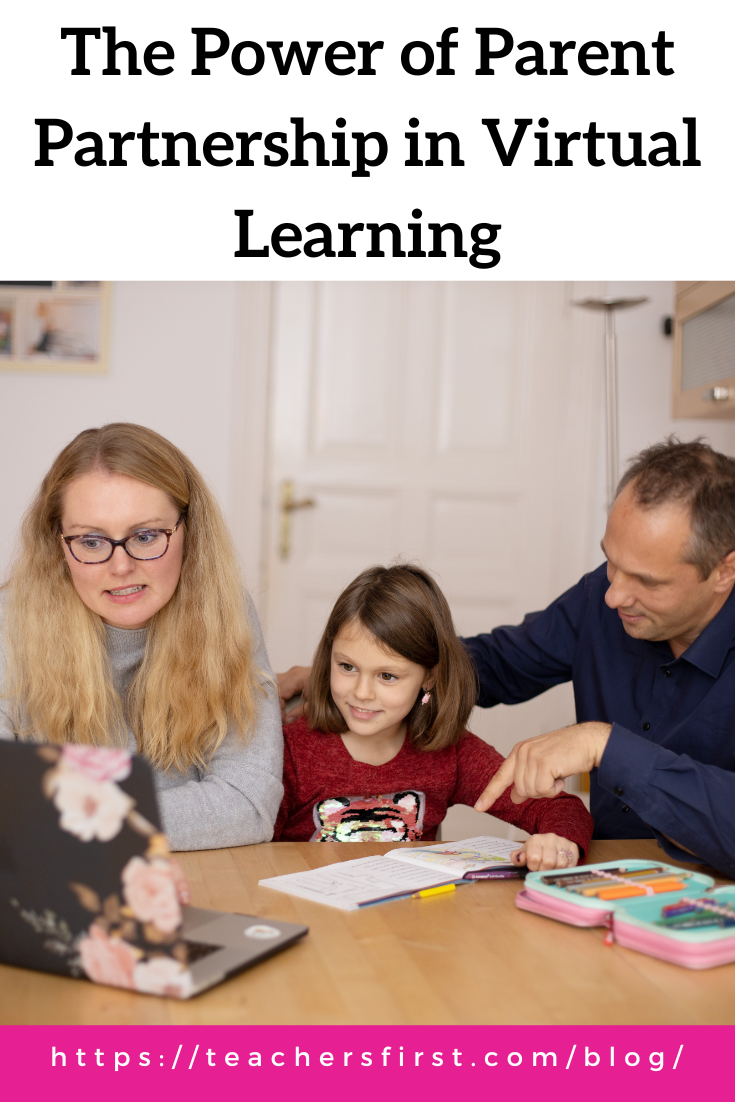
- Parents play a crucial role in their child’s education. Critical information on behaviors at home contributes to a more holistic understanding of the student. These observations not only help teachers offer more personalized instruction but also enable earlier, effective interventions. This empowerment fosters a sense of responsibility and involvement in their child’s education, strengthening the parent-teacher partnership.
- Collaboration opportunities help parents become more fully engaged in their students’ school experience. When parents help their children develop healthy learning habits, they experience a sense of accomplishment. This involvement reinforces the importance of their role in their child’s education and emphasizes the value of the educational experience, strengthening the parent-teacher partnership.
- Parents and teachers can work together to build and reinforce SEL skills, helping students develop emotional resilience in their learning. Having conversations about what students are learning allows parents to strengthen self-awareness and metacognition. Parents can assist in growing self-management skills when students reach points of struggle in their learning.
Educational researchers at George Mason University have identified key types of parent engagement for online settings, including:
- Helping students organize a home learning environment
- Assisting with instruction, including developing study skills and addressing technical issues
- Facilitating student interactions with the content and with their teacher
- Monitoring progress and performance to encourage continued engagement
Further, in his seminal Visible Learning meta-analysis, educational researcher John Hattie found that parental aspirations and expectations substantially impact student achievement, with an effect size of 0.80. (Effect sizes greater than 0.40 accelerate student learning.) He notes that, “many parents, however, struggle to comprehend the language of schooling and thus are disadvantaged in the methods they use to encourage their children to attain their expectations.” (p. 70). Most parents have not experienced virtual schooling as students themselves, so the opportunity for teachers to help build parent understanding of what students experience daily can help build stronger collaboration. Teachers can also help parents translate academic jargon and reinforce student learning as it plays out in their real-life experiences.
Strategies for Strengthening the Parent-Teacher Partnership
- Utilize communication tools that foster open, two-way connections.
- Create a booking calendar for parents to schedule phone calls that work for them. Many platforms offer free booking options, such as Koalendar or You Can Book Me. These websites will connect with your Google or Microsoft work calendar and allow you to set scheduling blocks. Then you simply share the booking link with parents to view your availability.
- Set up an accessible newsletter that parents can reference to keep up with what their students are learning. Use the free credits on Smore (reviewed here), which works well on different devices and can be shared via a shortened URL or embedded as HTML. Try including information on ways families can extend what students are currently learning in class into their home environment.
- Build in regular opportunities for parents to check in or share updates on their students with a survey tool such as Google Forms (reviewed here). Check form settings to ensure that respondents are set to anyone with the link, even if parents may have school- or domain-specific email addresses, to help eliminate a potential technology barrier.
- Offer digital resources that provide explicit training and technical support.
- Parents may have immediate access to real-time updates on student progress and performance in a virtual environment; however, they may not feel comfortable doing so, as effectively navigating digital spaces requires a certain level of comfort with technology. Use a curation tool, such as Wakelet (reviewed here), to create a “help hub” where parents can access on-demand support videos to help them navigate any needed platforms. Possible videos may include finding progress reports to help track student growth, confirming student completion of assignments, and communicating absences/logging attendance.
- Try using a design tool such as Canva (reviewed here) to create a “family page” that helps parents understand the ins and outs of how students learn in a digital environment. [Share with a public-view link or publish as a website.] Resource options include translating state standards in family-friendly language, tips for creating a successful at-home learning environment, digital study tools such as online flashcards and PDF annotation tools, and links to tutoring or other content support.
- Curate digital portfolios or other accessible showcases of student work.
Even though they may not be taking home folders of their work, virtual students are still involved in creation projects, presentations, and other digital activities that are worthy of sharing with parents! Curate student portfolios with a tool like Seesaw (reviewed here) and share them with parents to help them feel more connected to the student experience.
Leveraging edtech tools invites families into the virtual landscape and provides a pathway for parents to support, motivate, and encourage their students to fully engage in learning. Emphasizing regular, personalized communication and providing accessible resources helps capitalize on the promise of virtual education. What success stories can you share from your experience partnering with parents? We’d love to learn from you in the comments!