

If you’ve ever held a well-worn suitcase—one with scuffs, scratches, maybe even a frayed handle—you know it carries more than just belongings. Suitcases hold stories. Memories. Hope. And for millions of immigrants who arrived through Ellis Island after it opened on January 1, 1892, that suitcase represented the bridge between the lives they left behind and the ones they hoped to build.
At the height of immigration, that bridge was crossed at an astonishing pace. On April 17, 1907—the busiest day in Ellis Island’s busiest year—11,747 people passed through its doors in a single day. Each carried a suitcase, and each one held a story waiting to unfold.
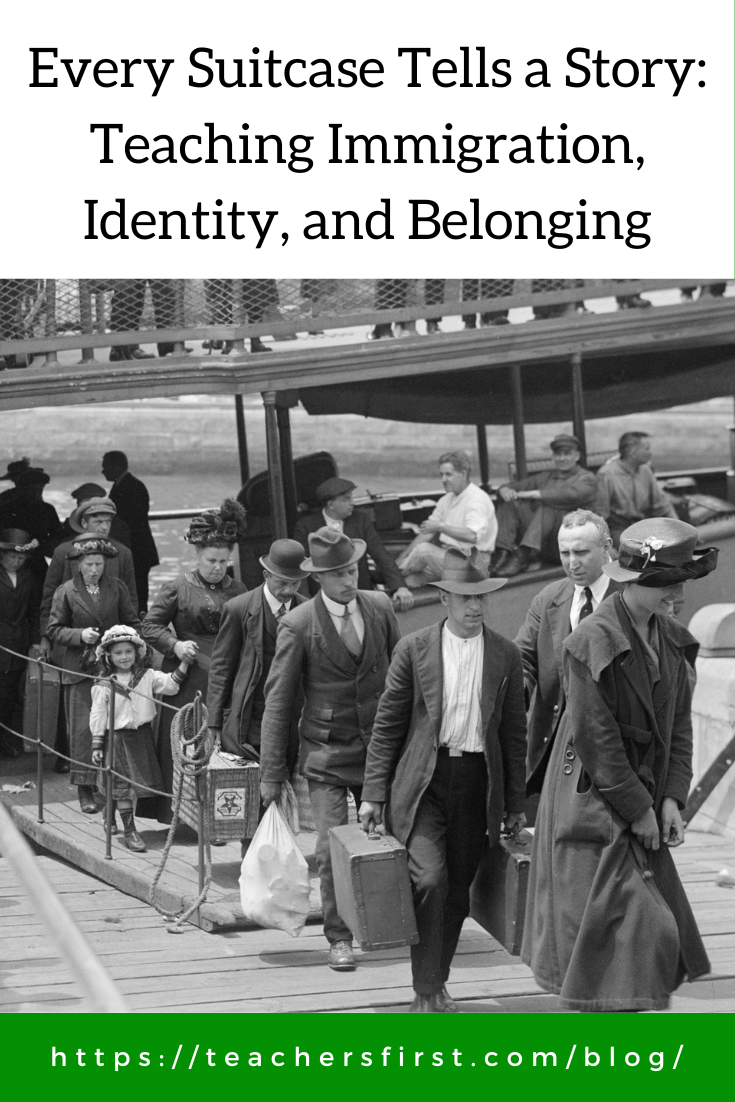
For students, that minor detail—a simple suitcase—can open the door to deeper understanding. It makes history feel human and personal. One of the most powerful ways to bring that humanity forward is through the authentic voices of children who arrived through Ellis Island and the many other routes that brought families to America.
We can introduce the story of Ellis Island and the pursuit of the American Dream through the authentic voices of Emma and William Greiner, siblings who arrived in 1925. Their memories offer an accessible and genuine perspective on immigration suitable for all grade levels. Furthermore, their personal story provides students with a relatable touchpoint for exploring this historical topic.
When Emma and William shared their memories for the National Park Service’s Ellis Island Oral History Project, they talked not about “big history,” but about the tiny decisions children make when they know everything is about to change. Their stories are part of the larger Oral History Project featuring interviews with over 1700 Ellis Island immigrants.
Eleven-year-old Emma packed mostly practical items for her journey, including clothing, wool blankets, and a few treasured pieces of family china. Despite her fear that “we may not be able to get here,” she prepared for the trip as best she could.
Twelve-year-old William’s memories focused on comfort items: greeting cards he had saved, his tin-soldier collection, and his cherished “Magic Lantern”—a small projector toy. His suitcase contained not just belongings, but imagination, play, and a tangible sense of home he brought to unfamiliar places.
Together, their choices paint a picture that resonates with students of all ages: two children, standing at the edge of something new, deciding what mattered most.
Once Emma and William’s story has been shared, integrate picture books that focus on the experiences of other immigrants who arrived through Ellis Island and other entry points.
Grades K-2: Include books that focus on feelings and objects:
- An Ellis Island Christmas by Rhea Leighton is inspired by the author’s own family history. It emphasizes the hardship of leaving home and the practical, difficult choices a 6-year-old Polish girl, Krysia, faces about what to pack, such as which of her two beloved dolls to bring on the journey.
- Gittel’s Journey: An Ellis Island Story by Amy June Bates is based on the true story of a young girl separated from her mother. Gentle but powerful.
- The Memory Coat by Elvira Woodruff tells the tender story of a girl afraid her old coat will keep her out of America.
- Dreaming of America: An Ellis Island Story by Eve Bunting recounts the story of Annie Moore, the first immigrant to arrive at Ellis Island, using beautiful storytelling.
- I Was Dreaming to Come to America by Veronica Lawlor features short oral histories paired with illustrations, making it excellent for teacher read-alouds.
After reading about Ellis Island, ask students to draw the items they would bring in their suitcase if they had to move to a new country. Use Pixabay (reviewed here) to find free clip art, such as this suitcase, to create a coloring page.
Use ClassTool’s Image Annotator (reviewed here) to share items students would bring to a new country. Upload an image of a suitcase, then add hotspots with a picture of each student’s item and their name. When finished, share a link to your interactive image on classroom computers so students can explore it independently.
Grades 3-5: Offer books that encourage upper elementary students to compare their experiences to those of immigrants and consider reasons why families immigrate from their home countries.
- We Came to America by Faith Ringgold is a poetic exploration of the many reasons people have journeyed to America, whether by choice, seeking hope, or forced to flee fear, and the cultural heritage they bring to America.
- Sugar in Milk by Thrity Umrigar is the tale of a young girl who recently moved from India and feels homesick until her aunt shares a story about the migration of their community to an unknown land, illustrating how new homes can be created while honoring one’s heritage.
- The Name Jar by Yangsook Choi: This book follows a Korean girl who is self-conscious about her name and considers changing it to an American one. It’s highly relatable for discussions on identity, fitting in, and cultural differences in a new school environment.
Ask students to create maps of immigrants’ journeys using Google My Maps (reviewed here). Include links to videos, stories of immigrants, and information about the country they left.
Use Google Slides (reviewed here) to make a digital suitcase template and create a collaborative presentation for students to share what they would put in a suitcase if they left the country. Add a slide for each student that includes an image of a suitcase, a list of items they would bring, and an area to discuss their choices using this example template.
Middle School: Students are mature enough to explore the emotional and historical complexities of immigration. Using picture books with sophisticated illustrations and concise text can help students explore complex themes such as war, trauma, and resilience in an accessible yet profound way.
- The Arrival by Shaun Tan is a sophisticated, wordless graphic novel that uses surreal, intricate illustrations to capture the feelings of displacement and awe an immigrant experiences in a new, utterly strange land.
- A Long Walk to Water by Linda Sue Park is not strictly a picture book; however, this short, impactful novel (often used in middle school curricula) weaves together the true story of Salva Dut, a “Lost Boy of Sudan” who becomes a refugee, with the fictional story of Nya, a Sudanese girl in 2008.
Share audio clips or transcripts from the National Park Service’s In Their Own Words collection to share relatable stories from immigrants, including trying pizza for the first time or starting school for the first time in a new country. Ask students to create short podcasts featuring the stories of immigrant children, focusing on the emotions they felt and the difficulties they encountered. Encourage students to think about common themes found across different children’s experiences and how these stories connect to larger historical events or immigration patterns.
High School: Students can extend their understanding of immigration by evaluating immigration stories through political, economic, and cultural lenses while continuing to connect personally through stories.
- The Journey by Francesca Sanna uses evocative, stylized illustrations and a first-person narrative to describe a family’s escape from war.
- Illegal, by Eoin Colfer and Andrew Donkin, is a graphic novel that tells the story of Ebo, a young boy from Ghana who embarks on a perilous journey across the Sahara and the Mediterranean Sea to Europe, hoping to reunite with his family.
Use Kialo for Edu (reviewed here) as a platform for student discussions on immigration, using big ideas and questions. For example, begin a debate with a question such as “What is the role of empathy in shaping immigration policies?” On the pro side, mention human-centered policies like what children bring in their suitcases, and on the con side, discuss why policies need to be grounded in law, not individual cases.
Presenting stories such as Emma and William’s suitcases to students of all ages helps them think concretely about identity, change, belonging, and family. Because Emma and William were children, students can naturally relate in different ways:
- Younger learners connect through feelings (“What would I take if I had to move?”)
- Upper elementary students begin to explore context and motivation.
- Middle and high school students dig deeper into historical forces, cultural identity, and immigration policy.
The suitcase, as part of the immigration experience, is more than an object; it’s a story waiting to be unpacked. By engaging with the personal experiences of immigrant children, students can step into the past, explore resilience and hope, and connect history to their own lives. Using books, artifacts, and creative activities, the simple suitcase becomes a powerful tool for teaching empathy, understanding, and the human side of immigration.