
224 history-culture-europe results | sort by:
 return to subject listing
Watch 1000 Years of European Borders Change in 3 Minutes - Nick Morenenko
Grades
7 to 12
This site includes advertising.
tag(s): england (49), europe (83), france (38), germany (25), italy (30), maps (222), russia (32), spain (12)
In the Classroom
This video is perfect for use on an interactive whiteboard or projector to provide an overview of the changes in European borders over many years. Pause the video as you watch to view and discuss changes. Use the embed or link code provided to share this site on your class web page. Have students create maps using MapHub, reviewed here, to demonstrate changes in borders. Students can add icons, URLs, text, images, and location stops! Divide students into groups to explore different periods of time, then challenge students to create a presentation using Prezi, reviewed here. Use during current events lessons to help students understand that current European conflicts relate back to changes taking place over many hundreds of years.You must be registered and logged in to add items to your favorites.
Use the form at the top of the page to log in, or click here to join TeachersFirst (it's free!).
Wide Angle Window Into Global History - PBS
Grades
6 to 12This site includes advertising.
tag(s): cross cultural understanding (167), cultures (302), maps (222)
In the Classroom
These resources and videos are extremely flexible for classroom use. Use the film clips for current events and to highlight past events. Use a video segment to get students thinking about past incidents, solutions, and whether today's environment has changed from that of the past. Show a variety of clips on one theme and discuss the events in the clip, or use a writing assignment to give students time to process them. Discuss in what ways these clips are similar and other societal, economic, and political factors that affected them. Use any of these videos to find current events that still deal with the same issue today. Be sure to brainstorm how different people, in other areas of the world, would view these issues. Research these issues using resources from other areas of the world to see editorials and news clippings that are not American. Note: Use the country code after your search term or use this news search. Were there other people interviewed about any of these issues? Who are they and what did they say? Consider creating videos showcasing a variety of viewpoints using FlexClip, reviewed here. Beyond each video's viewpoint, what common question do all videos within the theme share? How does the bubble of our American culture hamper our understanding of other people both here in the U.S. and abroad? Research the history and culture of the various areas to identify factors responsible for the themes portrayed by this resource.Add your comments below (available only to members) | Become a Member
You must be registered and logged in to add items to your favorites.
Use the form at the top of the page to log in, or click here to join TeachersFirst (it's free!).
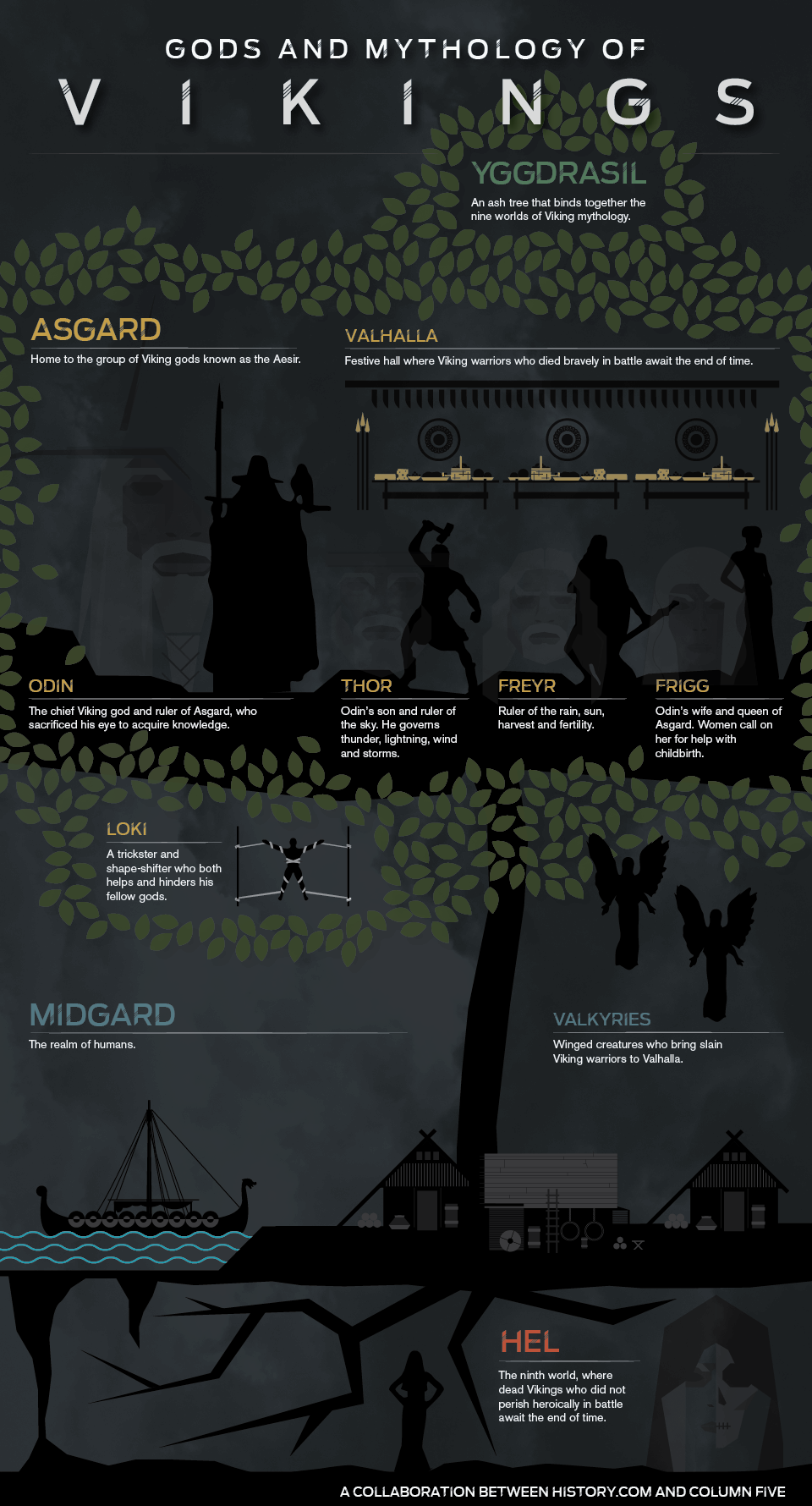
Gods and Mythology of the Vikings - History.com and Column Five
Grades
6 to 12tag(s): myths and legends (44), vikings (11)
In the Classroom
Use this infographic in conjunction with a study of Viking Mythology. Divide the students into small groups to investigate the different terms mentioned on the infographic. Have the students present their findings to the class by creating a multimedia presentation using one of the many TeachersFirst Edge tools, reviewed here. You might consider having students use Nordic Gods, reviewed here, to gather some basic information about the gods, Asgaard, etc.Add your comments below (available only to members) | Become a Member
You must be registered and logged in to add items to your favorites.
Use the form at the top of the page to log in, or click here to join TeachersFirst (it's free!).
Da Vinci - The Genius - The Museum of Science
Grades
6 to 12tag(s): artists (106), inventors and inventions (87), italy (30), leonardo davinci (3), renaissance (36)
In the Classroom
This site is perfect for use on your interactive whiteboard or with a projector. Explore the different portions together during your studies of the Renaissance, inventors, or artists such as Leonardo da Vinci. Share a link to this site on your class webpage for students to explore at home, or to use in your blended class activities. Add a link on classroom computers for use during computer centers. Have students replace paper and pen notes and take digital notes about what they are learnng using a tool like SimpleNote, reviewed here. Enhance students' learning by using Fakebook, reviewed here, to create a "fake" page similar in style to Facebook about Leonardo da Vinci or other Renaissance artists. Extend student learning by challenging individuals and small groups to take one of the concepts they learned from Leonardo and apply it to something from today's world. Use a bulletin board tool like Lino, reviewed here, to record and save student ideas. With Lino you can create stickies with images, commenting, videos, and more. After individuals and small groups have devoloped their art, invention, etc., have them present their learning and their invention, art, etc. to peers using one of these multimedia tools: Click the tool name to access the review: Genially, Microsoft PowerPoint Online, Animatron, Renderforest, and Canva Inforgraphic Maker.Add your comments below (available only to members) | Become a Member
You must be registered and logged in to add items to your favorites.
Use the form at the top of the page to log in, or click here to join TeachersFirst (it's free!).
Nordic Gods - Jo Edkins
Grades
6 to 12tag(s): myths and legends (44), vikings (11)
In the Classroom
Include this site when studying Nordic or Viking mythology. Have a link to this site on your class web page for students to use at home. You might also like to share the infographic Gods and Mythology of Vikings, reviewed here. Divide students into small groups to investigate the gods and where they lived. Have them present their findings to the class by creating a multimedia presentation using one of the many TeachersFirst Edge tools, reviewed here. You might consider having students use Fakebook, reviewed here. Have them create a "fake" page similar in style to Facebook from the perspective of any of the gods. Ask students to create a short story involving one or more of the gods and using the Old Norse names for other characters in their story. You might suggest the definition of the name indicate what that character is about.Add your comments below (available only to members) | Become a Member
You must be registered and logged in to add items to your favorites.
Use the form at the top of the page to log in, or click here to join TeachersFirst (it's free!).
Roman Gods - Jo Edkins
Grades
4 to 12tag(s): myths and legends (44), romans (54)
In the Classroom
Use this site as a reference for students studying world history and ancient religions. It is also an excellent introduction to a unit on the Romans for young learners. Put a link to this site on a classroom computer as an activity center for the Roman unit of study. Assign student pairs, or small groups, a topic (god or myths about that god). Have students create a multimedia presentation using Presentious, reviewed here. This tool allows narrating and adding text to a picture. Challenge students to find a Creative Commons photo or image, and then narrate the photo as if it is a news report about the god's life. To find Creative Commons images for student projects (with credit, of course), try Stockio, reviewed here.Add your comments below (available only to members) | Become a Member
You must be registered and logged in to add items to your favorites.
Use the form at the top of the page to log in, or click here to join TeachersFirst (it's free!).
History on the Net - Heather Wheeler
Grades
7 to 12This site includes advertising.
tag(s): african american (130), aztecs (10), battles (19), black history (133), britain (24), civil rights (228), cold war (40), egypt (60), elizabethan (12), greeks (45), mayans (31), myths and legends (44), native americans (169), olympics (64), romans (54), victorian (16), vikings (11), worksheets (72), world war 1 (88), world war 2 (169)
In the Classroom
Use this site as an anticipatory set or "activator" to introduce a unit or lesson on a projector or interactive whiteboard. Make a shortcut to this site on classroom computers and use it as a center. Use this site as the starting point for individual or group projects. This site is a perfect addition to use with President's Day activities, when learning about the Olympics, or as part of a Black History Month lesson. Be sure to include this site on your class web page for students to access both in and outside of class. Enhance students' learning by having them use Fakebook, reviewed here, to create a "fake" page similar in style to Facebook about a president, a passenger on the Titanic, a famous scientist, or another person learned about on this site. Have students modify their learning by creating an interactive, multimedia infographic sharing their findings using Venngage, reviewed here.Add your comments below (available only to members) | Become a Member
You must be registered and logged in to add items to your favorites.
Use the form at the top of the page to log in, or click here to join TeachersFirst (it's free!).
Teach World War One History with Food - American Historical Association
Grades
7 to 12tag(s): nutrition (140), world war 1 (88)
In the Classroom
Use these short videos to make life during World War I come alive. Consider asking students to make some of these recipes themselves at home, or if it's feasible, prepare an authentic meal at school as a treat during the unit. Students might discuss the issue of food rationing during both World War I and II as a contrast to the widespread availability of all kinds of food today. How is food rationing a patriotic act? Challenge students to find other popular recipes from this time in history. Have students video the preparation and explanation of the recipe. Share the videos on a site such as TeacherTube reviewed here.Add your comments below (available only to members) | Become a Member
You must be registered and logged in to add items to your favorites.
Use the form at the top of the page to log in, or click here to join TeachersFirst (it's free!).
CurriConnects Book List - 20th Century America, Part 1 (1900-1945) - TeachersFirst
Grades
K to 12tag(s): 1900s (87), 1910s (30), 1920s (17), 1930s (39), 1940s (68), 20th century (170), book lists (167), great depression (33), independent reading (85), world war 1 (88), world war 2 (169)
In the Classroom
Make the first half of the 20th century come alive during your unit on American History. Have students choose a book from this list and present their impressions from it in the form of a blog post from the times. If you are beginning the process of integrating technology, have students create blogs sharing their learning and understanding using Tumblr, reviewed here. Collect the links to all the student posts on your class web page for students to browse and gather a "human" experience of history.Add your comments below (available only to members) | Become a Member
You must be registered and logged in to add items to your favorites.
Use the form at the top of the page to log in, or click here to join TeachersFirst (it's free!).
Cool Kid Facts - CoolKidFacts
Grades
1 to 7This site includes advertising.
tag(s): animals (281), australia (27), brain (59), china (79), deserts (20), earth (187), egypt (60), greek (46), heart (26), human body (97), italy (30), magnetism (40), mars (25), mexico (67), moon (87), newton (25), photosynthesis (18), rainforests (16), rome (38), sun (87), tornadoes (17), tsunamis (15), volcanoes (60)
In the Classroom
Share this site with students on your interactive whiteboard (or projector) and show them all the different subjects available. Challenge students to find a topic about which they know nothing (or barely anything). This site will give them experience reading informational text on a topic they wonder about. Partner weaker readers with others who may be able to help them read the text-heavier articles. Have students read and research individually or in small groups taking notes using a simple graphic organizer from Holt Interactive Graphic Organizers, reviewed here. Use this opportunity to teach summarizing, and citing sources. Cool Kid Facts is a great tool to build background knowledge about all sorts of topics!Add your comments below (available only to members) | Become a Member
You must be registered and logged in to add items to your favorites.
Use the form at the top of the page to log in, or click here to join TeachersFirst (it's free!).
Classic Cat - Classic Cat
Grades
4 to 12This site includes advertising.
tag(s): composers (22), musical instruments (63)
In the Classroom
Incorporate this resource into your classroom music program. Use this site to introduce music eras (baroque, classical, romantic), lives of composers, or families of musical instruments. The comprehensive content can be used to supplement a music appreciation class, to augment a social studies or world language lesson on a particular historical/cultural era, or to serve as a guide for building a CD library.Add your comments below (available only to members) | Become a Member
You must be registered and logged in to add items to your favorites.
Use the form at the top of the page to log in, or click here to join TeachersFirst (it's free!).
The British Library - The British Library Board
Grades
7 to 12tag(s): art history (110), britain (24), england (49), great britain (14), maps (222)
In the Classroom
Create a link to the British Library website on classroom computers for students to explore on their own or with a partner. Use as part of any lessons about British history. Have students find and explore old maps and compare with current maps. Compare the maps using an online tool such as Interactive Two Circle Venn Diagram, reviewed here. View television and radio news archives together on your interactive whiteboard (or projector) to learn about the world from a British perspective about any time period such as World War I or World War II. Explore British authors and poets and view their manuscripts online!Add your comments below (available only to members) | Become a Member
You must be registered and logged in to add items to your favorites.
Use the form at the top of the page to log in, or click here to join TeachersFirst (it's free!).
Stuff You Missed in History Class - Tracy Wilson and Holly Frey
Grades
7 to 12This site includes advertising.
tag(s): archeology (26), black history (133), civil rights (228), civil war (148), cross cultural understanding (167), mental health (63), native americans (169), podcasts (188), religions (120), vikings (11), world war 1 (88), world war 2 (169)
In the Classroom
Use podcasts from Stuff You Missed in History to enrich current lessons or lure students into thinking history can actually be "cool." Provide a link on class computers or your class website for students use. Have students use a mapping tool such as Zeemaps, reviewed here, to create a map of one of these events (with audio stories and pictures included)! Have students use Fakebook, reviewed here, to create a "fake" page similar in style to Facebook about one of the people in these lesser known historic events.Add your comments below (available only to members) | Become a Member
You must be registered and logged in to add items to your favorites.
Use the form at the top of the page to log in, or click here to join TeachersFirst (it's free!).
40 Maps That Explain World War I - Vox
Grades
7 to 12tag(s): 1910s (30), 20th century (170), europe (83), map skills (68), maps (222), world war 1 (88)
In the Classroom
These maps are perfect for use on an interactive whiteboard. If you are teaching World War I, these maps need to be among your "go to" bookmarks for illustrating important highlights about the War. Consider also providing a link to the maps as part of materials students can access to learn more, as extra challenge, or for independent or group projects. The maps illustrating important technology first used in World War I will fascinate students who enjoy learning how things work. Have students create a multimedia presentation about the aspects of WWI that fascinate them most.Add your comments below (available only to members) | Become a Member
You must be registered and logged in to add items to your favorites.
Use the form at the top of the page to log in, or click here to join TeachersFirst (it's free!).
ORBIS: The Stanford Geospatial Network Model of the Roman World - Stanford University
Grades
7 to 12tag(s): maps (222), romans (54), rome (38), transportation (31)
In the Classroom
There are a lot of complexities involved in plotting a route between two cities, but the interface is pretty intuitive, and students with enjoy playing "what if" with the various possibilities. Once they get the hang of it, challenge individual students or groups to see who can make it from start to finish most quickly or cheaply. What happens if you start in the Winter? or the Fall? And of course, how did these challenges affect the real Roman Empire and its citizens? If individual computers aren't available, plot your travel as a class on your interactive whiteboard or projector. Include this in Latin or world history class to make Roman civilization more "real."Add your comments below (available only to members) | Become a Member
You must be registered and logged in to add items to your favorites.
Use the form at the top of the page to log in, or click here to join TeachersFirst (it's free!).
The National Archives Activities and Games - The British National Archives
Grades
1 to 12Download lessons, Resource Packs, and Podcasts. Be sure to check out the extensive section for students including games, study skill tips and advice, and information on using primary sources. Learn about important people, government officials, and heroes of the past and present such as Charles Dickens and Florence Nightingale. Explore and research famous events/times such as American Civil Rights Movement or Life During War Times. The site was created in the UK, so some of the pronunciations and spellings may differ from American English. A very few resources require Flash, but there is so much more here, that the site is worth your time.
tag(s): dickens (10), great britain (14), heroes (22), industrial revolution (21), medieval (36), victorian (16), world war 1 (88), world war 2 (169)
In the Classroom
Keep this site in mind as an easy place to find games and lessons related to British history (and even some world history topics). Use this site as an anticipatory set or "activator" to introduce a unit or lesson on a projector or interactive whiteboard. Present the same time period, such as World War II, from a British and American point of view using this site and similar primary source images from U.S. collections like this one or this one. Have students create timelines using Timeline JS, reviewed here. Timeline JS offers the option to upload and add photos, videos, audio, Tweets, and Google Maps making it interactive. Have students use Fakebook, reviewed here, to create a "fake" page similar in style to Facebook about a British resident during any time periods involved with these activities. Take advantage of the ready to go lesson plans, interactives, podcasts, and videos. Literature teachers will also want to explore and share the information about British authors.Add your comments below (available only to members) | Become a Member
You must be registered and logged in to add items to your favorites.
Use the form at the top of the page to log in, or click here to join TeachersFirst (it's free!).
The Florence Nightingale Museum - The Florence Nightingale Museum
Grades
6 to 12tag(s): biographies (102), heroes (22), medicine (52)
In the Classroom
Florence Nightingale is a favorite subject for biographies, particularly during Women's History Month. The biography and digital artifacts from her life will be useful to students who are researching the impact she made on modern medicine and nursing. Use this research information to create a simple infographic about Nightingale, using Canva Infographic Maker, reviewed here, or Venngage, reviewed here.Add your comments below (available only to members) | Become a Member
You must be registered and logged in to add items to your favorites.
Use the form at the top of the page to log in, or click here to join TeachersFirst (it's free!).
antiAtlas of borders - Migrations Map - Martin De Wulf
Grades
6 to 12tag(s): immigration (86), maps (222), population (50)
In the Classroom
Use Migrations Map during your study of any country to view immigration and emigration statistics in social studies, science, health, or even world language classes. Introduce this site on your interactive whiteboard or projector. Then have students explore this site independently or in small groups. Ask WHY these immigration patterns exist. What factors lead to immigration? What environmental impacts does it have? Be sure to point out the data lag -- is from 2007. You can also send them to find updated stats at the World Bank and other online sources. Have students create a simple infographic sharing their findings using Canva Infographic Maker, reviewed here, or Venngage, reviewed here. Have students collaborate to create interactive maps using MapHub, reviewed here. Students can add icons, text, images, and location stops!Add your comments below (available only to members) | Become a Member
You must be registered and logged in to add items to your favorites.
Use the form at the top of the page to log in, or click here to join TeachersFirst (it's free!).
Toporopa: Geography of Europe - Toporopa
Grades
4 to 12This site includes advertising.
tag(s): countries (67), europe (83), maps (222), rivers (17), volcanoes (60)
In the Classroom
Create a link on classroom computers for students to explore these interactives. This site could be used in world cultures, world geography, world languages, science, government, and many other subjects. Have students try the games and then research further information. For example, after finding all European countries that have a reigning monarch, have students find further information on the monarchies. Challenge the students to use a tool like Google Slides, reviewed here to share their findings.Add your comments below (available only to members) | Become a Member
You must be registered and logged in to add items to your favorites.
Use the form at the top of the page to log in, or click here to join TeachersFirst (it's free!).
CurriConnects Book List - Real Life in Wartime - TeachersFirst
Grades
K to 12tag(s): 1910s (30), 1930s (39), 1960s (54), 1970s (30), 20th century (170), korea (21), vietnam (41), world war 1 (88), world war 2 (169)
In the Classroom
Add a layer of human reality to the "facts" students study about wars that to them seem "long ago and far way." Go beyond the textbook by encouraging students to choose a book to make connections. Encourage them to share what they learn through writings, fictitious blog posts, or creative presentations using tools from the TeachersFirst Edge.Add your comments below (available only to members) | Become a Member
You must be registered and logged in to add items to your favorites.
Use the form at the top of the page to log in, or click here to join TeachersFirst (it's free!).
Add your comments below (available only to members) | Become a Member
Close comment form